Greentech (greentech.tw) · ISC Taiwan · Engine EcoPhils Inc (EEPI)
Don't Wait.
Sequester & Mitigate.
Award-winning green technology delivering measurable emissions reduction, urban heat island mitigation, and over $1 billion in projected US climate damage savings by 2030.
Our Integrated Approach
Combustion. Biorefining.
Sequestration. Health.
The climate crisis demands more than one solution. Our collaboration between Greentech (greentech.tw), Engine EcoPhils Inc (EEPI) and seatosoil.org.uk pairs cleaner combustion practices and biorefining with soil, sea and urban sequestration — a whole-system approach with the potential to reduce climatic storms, improve human health and deliver measurable carbon outcomes at scale.
Programme Impact Goals
Measurable Outcomes.
Global Stakes.
Every metric below is tracked, verified and reported through the Earth Sync platform — giving all stakeholders transparent, real-time visibility of our collective climate impact.
Quantified value of coastline assets protected through storm risk reduction, mangrove restoration and climate resilience infrastructure — a direct return on climate investment at national scale.
Total capital flowing into West African economies via the 100,000-vehicle donor retrofit programme — funding local jobs, clean transport infrastructure and distributed biorefinery nodes.
Estimated residents benefiting yearly from improved air quality, reduced fuel costs, green urban infrastructure and income generated through carbon credit programmes across the region.
Tonnes of CO₂ mitigated annually at full programme deployment — verified across fleet retrofits, biofuel substitution, urban greening and soil/sea sequestration pathways.
Who This Portal Serves
A Platform for All Stakeholders
Upcoming Coverage
Strategic Marketing & Media Outreach
Comprehensive marketing support incoming from Richard Diphilla via LinkedIn and specialist magazine coverage — amplifying our programme reach to investors, policymakers and climate stakeholders worldwide.
New — Global Opportunity
Global Carbon Crediting &
High-Value Derivatives
The same retrofit actions behind our 75% emissions reduction target open the door to carbon crediting globally — not just locally. The EEPI (Emissions, Energy & Performance Index) focuses on fuel efficiency and eliminating unburnt fuel — a high-impact chronic pollutant — turning every vehicle into a verified, tradeable carbon asset, while biorefining streams convert waste into fuel and high-revenue derivatives.
Verified Carbon Credit Chain
From Tailpipe to Tradeable Credit
Rigorous dynamometer and real-world emissions testing of retrofitted vehicles — establishing a verifiable baseline and post-retrofit delta.
Independent third-party certification under CARB-equivalent standards, validating the quantified reduction per vehicle per year.
Verified Carbon Standard credits issued through the Global Energy and Carbon Credit Initiative registry — tradeable on global carbon markets.
Mirroring the Sargassum2Value programme: every retrofitted vehicle earns verified carbon credits, while waste streams generate fuel production and high-revenue derivatives.
Biorefining Revenue Streams
High-Value Derivatives
Pharmaceutical & oncology-grade sulphated polysaccharides from sargassum biorefining.
Food, pharma and cosmetic thickening agents from brown seaweed streams.
Fermented from sargassum sugars — clean-burning transport fuel substitute.
Pyrolysis co-product locking carbon into soil while boosting agricultural yield.
Chinese Rose (Hibiscus) — Urban Health Planting
Wellbeing Co-BenefitUrban Chinese rose (hibiscus) plantings are paired with our vehicle retrofit programmes for their measurable health benefits alongside emissions reduction. These hardy, flowering plantings act as natural hydrocarbon filters in city environments — trapping fuel-derived pollutants in leaf tissue while supporting mental wellbeing, biodiversity and urban cooling. Paired with EEPI green infrastructure, they extend the emissions-reduction value chain from the tailpipe into the living fabric of the city.
Follow our impact reporting & analysis:
Crispin Broome — SubstackProven Impact
Numbers That Matter
Real-world results from deployed green technology — measurable, verifiable, and scalable.
Proven reduction in carbon and greenhouse gas emissions across deployed sites, validated by independent auditors.
Combined effect on Urban Heat Island phenomenon in Lagos — one of Africa's fastest-growing megacities.
Projected reduction in climate-related economic damage across US urban centers through widespread deployment.
Technology designed to accelerate corporate and municipal net-zero commitments ahead of global deadlines.
Urban Heat Island
UHI Mitigation in Lagos
Real-time LST (Land Surface Temperature) reduction, coverage mapping, and environmental restoration across Lagos metropolitan zones through EEPI green infrastructure deployment.
24-Hour Temperature Profile — Lagos
Urban core vs. suburban vs. with EEPI deployment (°C)
- Urban (no EEPI)
- Suburban Baseline
- Urban + EEPI
Environmental Health Index
Before vs. After EEPI deployment — Lagos zones
- Before EEPI
- After EEPI
Heat Intensity Grid — Lagos Metro
After EEPI deployment · cooler = darker green
Zone-by-Zone Impact
Temperature reduction & green coverage per Lagos district
Land Surface Temperature Maps
Satellite-derived LST (Land Surface Temperature) heat maps for Lagos Metro, powered by AGESSinc remote sensing analytics. Showing before and after EEPI green infrastructure deployment.
LST data sourced from AGESSinc satellite remote sensing. Resolution: 30m × 30m. Landsat-8 / Sentinel-3 fusion. Temporal baseline: 2022–2025 seasonal averages.
Core Capabilities
Features to Build a Sustainable Future
EcoEngine Insights delivers measurable environmental impact through proven green technology solutions.
Heat Mitigation
Advanced urban heat island reduction through reflective green infrastructure and smart cooling systems, reducing peak temperatures by up to 5°C across target zones.
Emissions Reduction
Measurable CO₂ and pollutant reductions through energy-efficient deployment and carbon sequestration via green infrastructure.
Coastal Mangrove Sequestration
Brackish zone mangrove restoration and wetland protection for enhanced carbon sequestration, storm surge mitigation, and biodiversity recovery.
Inner City Planting Sequestration
Strategic urban tree planting and green space development in dense city cores to enhance local carbon capture, improve air quality, and support biodiversity.
Soil Solutions & Food Security
Earth Source soil regeneration paired with sustainable planting to maximize sequestration, increase crop yields, and establish local food security networks with minimal human disturbance.
Our technology integrates real-time LST monitoring, AI-driven deployment optimization, and impact verification to ensure measurable climate action.
Future Modeling
Scenario Simulator
Explore how green infrastructure investments and energy efficiency upgrades impact environmental and financial outcomes through 2030.
Urban parks, rooftop gardens, street vegetation across target zones
Brackish zone mangrove & wetland restoration for enhanced sequestration
Improve building and infrastructure energy performance
Emissions Reduction
2.06
Million tons CO₂e
Tree Equivalents
1,000
trees
Annual Savings
$0.5B
by 2030
Emissions Trajectory (2026-2030)
- Baseline (No Action)
- With EEPI Scenario
Baseline emissions vs. projected emissions under current scenario
Cumulative Cost Savings (2026-2030)
Energy cost and operational savings from efficiency and green cover improvements
Capital Deployment
Donor Car Retrofit Program
100,000 retrofitted vehicles deployed across West Africa by 2028, combining biofuel technology, emission filtration, and Western regulatory oversight to achieve doubled carbon offset (1→2 tons CO₂/year per vehicle).
Biofuel Integration
Advanced biofuel retrofit reduces fossil fuel dependency and cuts emissions in half
Regulatory Audit
Western country auditing & regulation ensures compliance and carbon credit validity
Emission Filtration
High-GWP gas capture and filtration system removes methane and other harmful emissions
West Africa Capital Deployment
£100–400M capital deployed directly into West African economies — vehicle cost £1–4K (device cost negligible), driving sustainable infrastructure and local jobs
Vehicle Deployment (2026-2028)
Annual and cumulative vehicle deployment with CO₂ offset projections
- Annual Deployment
- Annual CO₂ Offset (tons)
Capital Inflow & Carbon Credits (2026-2030)
Financial investment and carbon credit value generation through 2030
- Capital Inflow (£M)
- Carbon Credits (£M value)
Program Impact & Economics
Annual CO₂ offset by full deployment (2028)
Double the baseline 1 ton/vehicle/year
Total capital deployment to West Africa
£1K–4K per vehicle · device cost negligible
High-GWP gases captured (2026-2030)
Methane & harmful emissions filtered
US Match Required —
We Save Your Coastline
EcoEngine Insights projects deliver $1 billion per year in US coastline damage savings from 2030. We require the US to match our deployment funding. In doing so, Africa earns $14 million per cycle — and 100,000 UK donor cars (£1–4K each) are justified by lives saved, insurance cost reductions, and direct coastline protection value generated in the United States.
Annual US coastline damage savings attributable to sargassum mitigation, UHI reduction, and storm attenuation — delivered by EcoEngine Insights deployment from 2030 onwards.
If the US matches the deployment funding criteria, Africa earns $14 million per cycle — directly funding local green infrastructure, jobs, and vehicle retrofit programmes across West Africa.
100,000 donor cars funded from UK at £1–4K per vehicle. The return justification: lives saved, reduced insurance costs, and direct coastline protection value for the US — making each vehicle a measurable climate and financial asset.
Each retrofitted vehicle contributes to reduced mortality from air pollution, lower insurance premiums through cleaner fleets, and indirect coastline protection by reducing the atmospheric CO₂ and thermal loading that intensifies hurricanes.
On current figures: the US receives $1 billion/year in coastline protection value from 2030 as a direct consequence of EcoEngine Insights deployment. We publish this requirement openly — if the US matches the stated funding criteria, Africa earns $14 million per funding cycle, 100,000 donor cars are deployed from the UK at £1–4K per vehicle, and the combined return in lives saved, insurance cost avoidance, and coastline damage prevention far exceeds the capital deployed. This is not a donation. It is a return on a climate investment.
Interactive Tool
Calculate Your Impact
Input your local data to estimate CO₂ savings, cost reduction, and UHI mitigation with EEPI technology — including biorefining, oriental rose hydrocarbon filtration, and Earth Sync collective tracking.
5-Year Financial Dashboard
ROI, Carbon Revenue & Cost Savings Projections
Based on your fleet calculator inputs. Carbon price appreciates 12% annually; operational efficiency compounds 8%/yr.
- Carbon Revenue
- Opex Savings
Break-even at Yr 1.5: EEPI cumulative returns surpass initial capital outlay, after which every dollar is pure net gain.
Yr 5 baseline avoided: $23,484 in unmitigated costs vs. $51,933 generated with EEPI.
| Year | Carbon Rev. | Opex Save | Net Position | ROI % |
|---|---|---|---|---|
| Yr 1 | $4,250 | $4,250 | $4,250 | -33% |
| Yr 2 | $4,760 | $4,590 | +$5,100 | +40% |
| Yr 3 | $5,331 | $4,957 | +$15,388 | +121% |
| Yr 4 | $5,971 | $5,354 | +$26,713 | +210% |
| Yr 5 | $6,687 | $5,782 | +$39,183 | +307% |
Projections assume 12% annual carbon price appreciation (in line with voluntary carbon market forecasts), 8% compounding operational efficiency gains, and stable deployment scale. Capital cost estimated at 3× annual baseline cost savings. Actual results depend on deployment scope, market conditions, and policy environment.
Earth Sync — Collective CO₂ Mitigation
Every vehicle fitted with EEPI technology eliminates up to 1 tonne CO₂/yr. Add biorefining (biodiesel / bioethanol) for another 1 tonne CO₂/yr. Sync your data to Earth Sync and contribute to city-wide and global collective mitigation targets.
Bloom → Biorefinery: Fastest Route Dashboard
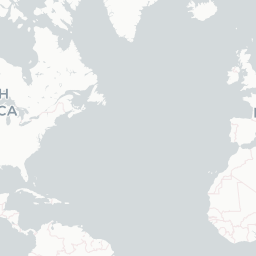
Satellite-tracked sargassum accumulation zones plotted against operational nano-particle biorefinery nodes. Click any bloom to compute the optimal harvest-to-refinery logistics route and fucoidan extraction co-location.








Bloom positions derived from simulated MODIS/Sentinel-3 satellite data. Biorefinery node capacities reflect planned nano-granular processing infrastructure (Greentech (greentech.tw) / Engine EcoPhils Inc (EEPI) deployment model). Fucoidan extraction co-located at nodes marked ✓. Biofuel yield estimated at 28% dry-weight conversion. Transit speed baseline: 12 knots shallow-draft harvest vessel.
Global Footprint
Active Projects Worldwide
Green infrastructure zones, vehicle retrofit hubs, and sargassum biorefinery nodes across West Africa, the Caribbean, Europe, and Asia-Pacific.











Building Energy Calculator
What Could Your Building Save?
Estimate CO₂ reduction, temperature drop, and cost savings for your building with EEPI green infrastructure, Endotherm gas efficiency, and Endocool cooling technology.
- Electric
- Gas
- Cooling
Integrated Strategy
Cross-Pathway Sequestration Model
Vehicles, urban infrastructure, and soil regeneration work synergistically to achieve climate, environmental health, and food security outcomes.
Fleet Sequestration
- 1 tonne/vehicle
- +1 tonne biorefining
- +0.18 HC reduction
Urban Sequestration
- 75% energy reduction
- −5.1°C UHI mitigation
- Green infrastructure
Soil Sequestration
- 0.54 kg CO₂/m²/yr
- +85% crop yield
- Soil resilience +90
Collective Carbon Mitigation
All three pathways feed into Earth Sync platform, enabling coordinated climate action tracking and synchronized progress toward 2030 emissions reduction targets.
Synergistic Impact
+3.5 tonnes CO₂/yr per integrated unit
Policy Integration: This cross-pathway model aligns with global climate commitments (Paris Agreement targets), food security initiatives (SDG 2), and urban resilience frameworks (C40 Cities). By demonstrating synergy across vehicles, buildings, and soil health, stakeholders can justify scaled investment in integrated green infrastructure and regenerative agriculture programs.
Make a Difference
Donations & Contributions
Every contribution directly funds EEPI green infrastructure deployment, UHI mitigation, and collective CO₂ reduction tracked via Earth Sync — powered by AGESSinc analytics.
Recognition
Award-Winning Innovation
Asian Sustainability Excellence
Engine EcoPhils Inc (EEPI) recognized by the Environmental Excellence & Performance Initiative for breakthrough contributions to sustainable urban infrastructure across Asia.
ISC Recognised — International Science Council
Greentech (greentech.tw) — Taiwan-based, authorised in 15 countries — is sponsored and recognised by the International Science Council (ISC), formed in Taipei 2018 by merging ICSU (founded Brussels 1931, operated from Paris) and ISSC. ISC is headquartered in Taiwan.
75% Verified Emissions Reduction
Third-party certified results across multiple markets in Southeast Asia and Africa via Engine EcoPhils Inc (EEPI)'s nano-granular fuel atomisation and EEPI filtration technology.
Urban Climate Leadership — EEPI
EEPI (Ecophils Environmental Protection Initiative) awarded the Asian Sustainability Award for direct, quantifiable impact on Urban Heat Island mitigation and pollutant removal filtration in developing megacities.
Financial Projections
$1 Billion by 2030
Cumulative savings including US climate damage reduction and Donor Car Program capital inflow to West Africa.
Cumulative US Damage Savings
In USD millions, 2024–2030
Emissions: Baseline vs. With EEPI
Indexed emission levels, 2024–2030
- Baseline
- With EEPI
Direct Support
Donate via PayPal
Directly support the teams driving climate action — from UK green infrastructure and West Africa vehicle retrofitting to sargassum biorefinery nodes, EcoApps, and GECCI collaboration.
Help Resolve the Climate Crisis
Anyone can contribute — individuals, organisations, investors, or communities. Every donation, no matter the size, directly funds verified green infrastructure, West Africa vehicle retrofits, sargassum biorefinery nodes, and collective CO₂ mitigation.
Supporting green infrastructure deployment and UK logistics coordination for EcoEngine Insights.
 Donate via PayPal
Fund vehicle retrofit deployment, EcoApps development, and GECCI collaboration across West Africa communities.
Donate via PayPalSupport the development and operation of Cesar nano-particle biorefinery nodes for sargassum-to-biofuel conversion.
Donate via PayPalSupport sargassum clearance logistics and nano-particle biorefinery node operations across coastal zones.
Donate via PayPalStripe payments coming soon · All contributions support verified climate action projects
Partner With Us
Join the Green
Infrastructure Revolution
Engine EcoPhils Inc (EEPI) and Greentech (greentech.tw) are seeking strategic investors and partners to scale our proven technology globally. Be part of a $1B+ opportunity by 2030.
© 2026 Engine EcoPhils Inc (EEPI). All rights reserved. · Asian Sustainability Award Recipient
Crispin Broome — Substack